
-
2026
- Aug 24, 2026 Fall Beauty Prep, Pricing Transparency, and the Rise of the Beauty “De-influencer” Aug 24, 2026
- Aug 22, 2026 How Much Does Bridal Makeup Cost in NYC? A Real Pricing Guide Aug 22, 2026
- Aug 17, 2026 Fall Wedding Season Is Just Getting Started: Travel Kits, Touch-Up Truths, and the PR Pitches Worth Answering Aug 17, 2026
- Aug 10, 2026 Barrier Repair Season, the Business of Referrals, and What Creator Partnerships Get Wrong Aug 10, 2026
- Aug 3, 2026 The Monochrome Makeup Moment, Client Communication, and Why “Natural” Still Means Different Things Aug 3, 2026
- Jul 27, 2026 Skin Cycling, Slow Beauty, and What Bridal Clients Are Actually Asking For This Summer Jul 27, 2026
- Jul 20, 2026 What’s Actually Working Right Now: Skin, Business, and the New Rules of Beauty PR Jul 20, 2026
- Jul 13, 2026 National Clean Beauty Day, Skinimalism, and Why Beauty PR Is Finally Hiring Grown-Ups Jul 13, 2026
- Jun 22, 2026 Hyperreal Glow: Summer Beauty’s Biggest Shifts Jun 22, 2026
-
2024
- Oct 21, 2024 The Cost of Service: Reflections on Value and Worth in the Elite Circles of New York City Oct 21, 2024
-
2018
- Jul 30, 2018 Jul 30, 2018
- Jul 30, 2018 All Things Pretty — Beauty by Dani Levi Jul 30, 2018
- Jul 27, 2018 Skin is Always IN......... Jul 27, 2018
Summer Skin
Who the "F" else is as obsesssssed with it besides moi??
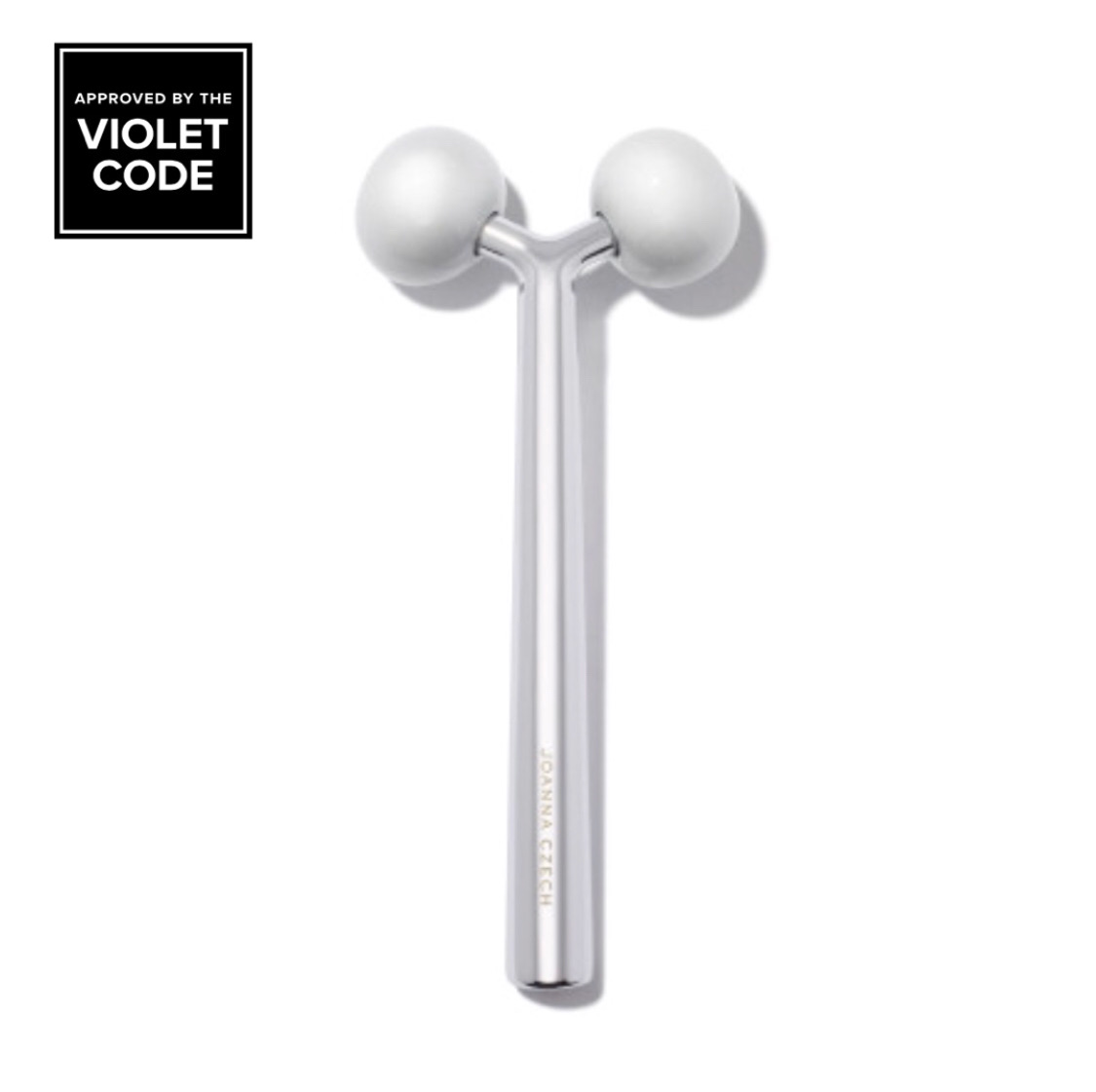
I'm mid swoon over Joanna Czech's new Facial Massager, don't worry it's completely sold out on Joanna's site. Praise to Violet Grey!!! Fully stocked and violet code approved. When I say this little hand held sex toy for your face will have your cheekbones looking as if they have been doing kegel exercises since conception I am not exaggerating. Let's get to the most exciting part, I know I know what's better than a "Facial Massager Sex Toy" for your face that emphasizes your cheekbones you ask? Duhhhh..... Massaging the skin speeds up circulation, bringing more oxygen to the tissue, resulting in brighter, dewier, healthier skin! It can sculpt the face; lift the brows, the jawline and chisel those cheekbones. My absolute fav feature in addition to stimulating the face muscles and skin, Czech’s massager allows products to penetrate deeper into the dermis, boosting circulation and elasticity, and drains and sculpts the face. The result: firmer, tighter, better skin.
-
2026
- Aug 24, 2026 Fall Beauty Prep, Pricing Transparency, and the Rise of the Beauty “De-influencer” Aug 24, 2026
- Aug 22, 2026 How Much Does Bridal Makeup Cost in NYC? A Real Pricing Guide Aug 22, 2026
- Aug 17, 2026 Fall Wedding Season Is Just Getting Started: Travel Kits, Touch-Up Truths, and the PR Pitches Worth Answering Aug 17, 2026
- Aug 10, 2026 Barrier Repair Season, the Business of Referrals, and What Creator Partnerships Get Wrong Aug 10, 2026
- Aug 3, 2026 The Monochrome Makeup Moment, Client Communication, and Why “Natural” Still Means Different Things Aug 3, 2026
- Jul 27, 2026 Skin Cycling, Slow Beauty, and What Bridal Clients Are Actually Asking For This Summer Jul 27, 2026
- Jul 20, 2026 What’s Actually Working Right Now: Skin, Business, and the New Rules of Beauty PR Jul 20, 2026
- Jul 13, 2026 National Clean Beauty Day, Skinimalism, and Why Beauty PR Is Finally Hiring Grown-Ups Jul 13, 2026
- Jun 22, 2026 Hyperreal Glow: Summer Beauty’s Biggest Shifts Jun 22, 2026
-
2024
- Oct 21, 2024 The Cost of Service: Reflections on Value and Worth in the Elite Circles of New York City Oct 21, 2024
-
2018
- Jul 30, 2018 Jul 30, 2018
- Jul 30, 2018 All Things Pretty — Beauty by Dani Levi Jul 30, 2018
- Jul 27, 2018 Skin is Always IN......... Jul 27, 2018
The Monochrome Makeup Moment, Client Communication, and Why “Natural” Still Means Different Things
Monochrome makeup, the same tone worked across eyes, cheeks, and lips, has come up in enough client references this month that it’s worth breaking down properly. It photographs beautifully, but it’s also one of the more misunderstood requests I get, because “natural” means something different to nearly every bride who says it.
What’s actually working in skincare right now
For monochrome looks to read as intentional rather than flat, the skin underneath has to be doing real work. I’ve been leaning on a vitamin C and barrier routine in the weeks before a trial, specifically because uneven tone shows more, not less, when the rest of the face is one color family. Clients who stuck with a consistent iS Clinical routine through their engagement had noticeably more even color underneath a sheer base, which meant less product overall on the day.
The look right now
The technique that makes monochrome work is using a cream product in the same shade family on lids, cheeks, and lips, then setting only where needed. I’ve found Westman Atelier’s cream formulas blend into skin without sitting on top of it, which matters because three matte layers in one tone can flatten a face fast under camera flash. The goal is depth, not sameness.
This is also where the “natural” conversation gets tricky. Half my consults mean “no makeup makeup,” the other half mean “full glam but soft.” I’ve started asking clients to bring three reference photos instead of describing the look in words, because it saves both of us from a mismatched expectation on the wedding morning.
The beauty business
Reference photos as a required part of booking has become one of my better process changes this year. It’s a small ask, but it’s cut the number of trial revisions I need almost in half.
The new PR playbook
I turned down two partnership pitches this month for products outside my clean beauty standard, even though the offers were generous. It’s not worth the trade for me, and I’d rather a slower content calendar than recommending something I wouldn’t actually put on a bride.
The takeaway
If your idea of “natural” and your makeup artist’s idea of “natural” haven’t quite matched up before, you’re not alone, that mismatch is more common than people think. Tell me about it in the comments, or catch up on past breakdowns in the review archive at danilevibeauty.com.
Skin Cycling, Slow Beauty, and What Bridal Clients Are Actually Asking For This Summer
This is the stretch of summer when bridal consults start sounding different. Fewer clients are asking me for a specific finish off a reference photo, and more are asking what they should actually be doing to their skin between now and the wedding. That shift is worth paying attention to, because it changes how I plan a trial.
What’s actually working in skincare right now
Skin cycling has held on longer than most trends I see come through client conversations, and I think that’s because it’s not really a trend, it’s just a sensible rotation (active nights, recovery nights, repeat). For brides in the twelve weeks out window, I’ve been recommending exactly that instead of stacking new products all at once. The result I actually see on the day is less redness at the jawline and around the nose, which is where most makeup breakdown starts anyway.
The other shift is toward barrier-first routines over anything marketed as a quick fix. A client using a barrier cream like the one in Augustinus Bader’s lineup in the two weeks before her wedding had noticeably less flaking under foundation than clients who tried a new acid or retinoid that same week. That’s not a knock on actives, it’s a timing issue, and it’s the piece I spend the most time explaining in consults now.
The look right now
Technique-wise, the second-skin finish is still where most of my brides land, but the way we’re getting there has changed. Less powder overall, more setting spray reapplied strategically at the T-zone only, so the rest of the face keeps movement. On a humid August ceremony, that approach held through a two-hour outdoor cocktail hour without the client needing a single touch-up beyond blotting.
Sweed lashes have been my go-to for brides who want lift without weight. They don’t drag by hour six the way some strip lashes do, and that’s the actual test on a wedding day, not how they look in the first thirty minutes.
The beauty business
I’ve started putting pricing directly in my first response email instead of waiting for a consult call to bring it up. It sounds like a small change, but it’s cut down significantly on consults that end in a client going quiet because the number surprised her. Clarity upfront is better for both of us.
The new PR playbook
I’m getting more outreach from smaller, founder-led skincare brands than from the big houses right now, and honestly the founder-led pitches tend to be better, because the person emailing me actually knows what’s in the product and why. That’s the kind of partnership conversation I’ll take a meeting for.
The takeaway
That’s what’s actually happening in my kit and my inbox this week. If you’re planning a wedding and wondering where to start with your skin, or you just want to talk through what’s realistic in your timeline, drop a comment below or look back through the review archive at danilevibeauty.com for more. Talk soon.
What’s Actually Working Right Now: Skin, Business, and the New Rules of Beauty PR
What's Actually Working Right Now: Skin, Business, and the New Rules of Beauty PR
I spent three days this week doing bridal trials back to back, moving from apartment to apartment with my kit, and if there's one thing that stands out after 23 years in this work, it's this: the industry moves fast, but good technique and honest products never go out of style. This week I want to walk you through what's actually landing on skin, what's shifting in the business side of beauty, and how the PR world is changing the way products reach you in the first place.
The Look Right Now
Glass skin had its moment, and now it's evolving into something softer. I'm seeing what the industry is calling "cloudglow," a dimensional, soft-focus luminosity rather than a wet, mirror-like shine. On clients, I get there by layering a hydrating primer under a thin veil of foundation, then setting only where needed. The result reads lit from within on camera, not greasy under studio lights, which is the real test.
Bronzed, sun-warmed skin is back for summer, paired with a strategic flush along the cheekbones, what some are calling a "blushy, sunburnt moment." I've been building this on clients with a cream bronzer worked into the high points of the face before powder, so it sits under the skin rather than on top of it. No patchiness, no mask effect, even by hour six.
And keep an eye on blue. It showed up on several runways this season, and I'm already fielding requests for icy, frosted lids on younger clients. It reads modern without looking costume-y when you keep the rest of the face soft, a hydrated lip, groomed brow, nothing competing.
What's Working in Skincare
The 10-step routine is losing ground to what I'd call intentional minimalism, four or five well-chosen, multi-active steps instead of a shelf full of single-purpose products. I've watched this shift happen in real time in client prep. A well-formulated serum that handles hydration, brightening, and barrier support in one layer means less product sitting on the skin before I ever pick up a brush, and less risk of pilling under foundation. That's not a trend I'm skeptical of. It's just better formulation catching up to how people actually live.
Red light therapy is also moving from spa treatment to daily habit, with searches up over 300 percent in the last year. I've started recommending a short at-home session to clients prepping for events a week out, mainly for the calming effect on redness and the visible bounce it gives to the skin before makeup goes on. It's not a replacement for a good routine, but it earns its spot as a supplement to one.
None of this changes my core belief, the one I keep coming back to in this space: clean beauty does not mean compromise. A formula can be safe and still perform at a professional level. I've built a 23-year career proving that's not a trade-off, it's a standard.
The Beauty Business
There's real regulatory movement worth watching if you care about what "clean" actually means. The EU's anti-greenwashing directive takes effect in September, and it specifically targets vague claims like "eco-friendly" and "biodegradable" without evidence behind them. In the US, the FDA is tightening enforcement under MoCRA, with a proposed rule on fragrance allergen labeling due this spring.
I think this is good news, even though it will be an adjustment for smaller brands. For years, "clean" has been a marketing word more than a regulated one, and nearly one in three products sold in the US now carries some version of that label. Tighter definitions mean the brands that have been doing the real work, transparent sourcing, actual safety data, will finally get to stand apart from the ones that were just borrowing the language. That's the regulatory gap closing, and it's worth applauding.
The New PR Playbook
The way beauty brands reach people has changed shape, and I see it firsthand through the creators I work alongside on jobs. The word of the year in this space isn't "authenticity" anymore, it's trust. Audiences want clinical proof, not adjectives. Campaigns that pair a product with a dermatologist or a working makeup artist are outperforming ones that lean on a big name alone, in some cases by a wide margin.
Micro and nano creators, the ones with tight, engaged followings under 100,000, are also outperforming celebrity partnerships on trust and cost efficiency. And the content that's actually converting isn't the polished, aspirational shot. It's the close-up swatch, the texture demo, the honest before and after. Which, frankly, is how I've always approached showing my own work. No fluff, just real performance, captured plainly enough that you can judge it for yourself.
The Takeaway
Whether it's a formula, a face, or a marketing campaign, the thread running through everything this week is the same: proof over promise. Skin that looks lit from within because the product actually supports the barrier. Regulation that asks brands to back up their claims. Creator partnerships that earn trust instead of borrowing it. That's the direction I want to keep moving in, on set and in this space.
I'd love to hear what you're noticing in your own routine this summer, drop a comment below and let me know. And if you're curious what's actually worth every penny in your kit, take a look through the review archive at danilevibeauty.com, I'm always adding to it.
Until next week,
Dani
Hello, World!
The Beauty Business Edit Bridal skin prep starts long before the makeup brush touches the face. In my kit, the foundation of every look is absolute hydration. If the base isn't prepped, the final look won't hold under high-definition cameras. You do not need more products, you just need the right ones to ensure performance without compromise. DaniSays: trust this. Investing in advanced credentials is what separates a standard service from a luxury experience. For beauty professionals looking to expand their service menu, upgrade their technical skills, and command higher rates, Luxe Beauty & Body Co earns its spot. They provide internationally accredited online certifications and pro-grade tools that help beauty CEOs scale their businesses fast. No fluff, just real professional performance that elevates your brand authority.All Things Pretty
The Look Right Now
The Beauty Business & Pro Education
National Clean Beauty Day, Skinimalism, and Why Beauty PR Is Finally Hiring Grown-Ups
National Clean Beauty Day meets a biotech skincare shift, a wave of clean beauty investment, and a sharper look at who really deserves to be the face of a brand.
This Wednesday, July 15, is National Clean Beauty Day, and it lands at a genuinely interesting moment for the category. Clean beauty isn’t the scrappy alternative anymore, it’s roughly a $10.5 billion global market growing at a double-digit clip, with more than two-thirds of shoppers now actively seeking out clean-labeled products. That’s not a niche. That’s the mainstream catching up to what a lot of us were already doing.
What’s actually moving in skincare right now
The ingredient conversation has shifted again, and it’s worth naming the shift plainly: 2026 skincare has gone biotech. Exosomes are everywhere, the tiny extracellular vesicles that help skin cells communicate, carrying peptides and signaling molecules that support repair rather than just sitting on top of skin. PDRN, the salmon-DNA-derived ingredient that made its way over from K-beauty clinics, is now showing up in mainstream serums alongside next-generation biomimetic peptides designed to mimic growth-factor signaling without the growth factors themselves. Medik8’s Exo-PDRN Prismatic+ Serum, which I mentioned a couple weeks ago, is a clean, well-formulated entry point into this if you’re curious.
The other real trend, and one I think matters more for most people’s actual routines, is skinimalism, but not the version that just means “buy less stuff.” The 2026 version is about fewer steps built on smarter formulations: a gentle cleanser, a ceramide-forward moisturizer, one well-chosen active, and SPF you’ll actually reapply. It’s a rebalancing toward barrier health and away from the irritation-as-progress mentality that dominated the last few years of retinoid and acid layering. If a client asks me for a routine reset this month, this is the framework I’m handing them.
The business side is proving the point
A few developments worth flagging for anyone watching where clean beauty money is going: Gregg Renfrew (the founder behind Beautycounter) is launching a new Gen Z-focused clean beauty brand called beecee this September, built with community at the center of the model rather than bolted on after the fact. And Primally Pure just introduced a Tinted Face Care collection that folds skincare, sun protection, and natural-looking color into one clean formulation, which is exactly the kind of multi-functional product I want to see more of in this category. Following L’Oreal’s $1.1B acquisition of Medik8 and Salt & Stone’s recent investment round, the message from the capital markets is consistent: clean is no longer a discount positioning, it’s a premium one.
The PR question I can’t stop thinking about
I wrote a few weeks ago about the shift toward ambassadors who actually know the brands they represent, versus ones who are just a beautiful, paid-for prop. New data keeps confirming that instinct, so I want to go one layer deeper this week, into the professionals actually running these campaigns, not just the faces in front of them.
Here’s what’s new: brands are moving decisively toward multi-tier influencer structures instead of one giant ambassador deal. A dermatologist or aesthetician for credibility, a handful of micro-creators for real engagement, and a small number of longer-term brand ambassadors for continuity and storytelling. Sixty-three percent of brands now say they prefer sustained collaborations over one-off sponsored posts, and brand ambassador programs are outperforming every other influencer campaign type on ROI. That’s not a coincidence, it’s the market rewarding relationships over rentals.
What I find more telling, though, is a new category getting real investment: beauty professional ambassadors. Independent makeup artists, estheticians, and other working beauty professionals are being elevated into educator and mentor roles for brands, rather than just being handed a discount code. That’s a meaningfully different relationship than a celebrity endorsement, because a working professional’s credibility is built on actual expertise, the kind that can’t be faked in a comment section by someone who books appointments with that person. I think about someone like Sara Cereal (@saracereal) here, too, a voice that works precisely because her opinions read as hers, not handed to her. Brands that partner with people like that aren’t buying reach, they’re borrowing trust that took years to build, and that only works if the trust is real to begin with.
And the people managing the campaigns need to answer for it
This is where I want to push on the department head question directly, because it’s the part that gets the least attention. The old PR retainer conversation was about impression counts and outlet logos. That conversation is aging out. Base Beauty, one of the larger agencies in the category, put it plainly this year: brands must move at the speed of culture while being held accountable to performance, not just visibility. Agencies that built their pitch around senior strategist attention are now being asked to prove it, brands are being told to ask specifically which strategist will actually be on their account day to day, not just who showed up to the pitch meeting.
That’s the accountability gap that’s finally closing. A department head who can’t tell you whether a given campaign’s ambassador is actually embedded in the brand’s world, or just booked for the day, isn’t managing a narrative, they’re managing a media buy. The agencies pulling ahead right now are the ones treating that distinction as core strategy: vetting whether a spokesperson genuinely uses and believes in what they’re representing before signing the contract, not after a campaign underperforms and someone has to explain why.
Where this leaves a brand like mine
None of this changes what I already believe about bridal beauty, but it’s satisfying to watch the rest of the industry arrive at it with data. A bride isn’t hiring me off a highlight reel, she’s trusting that I know my kit cold and that everything in it, ILIA, Westman Atelier, Saie, Merit, Kosas, RMS, Medik8, Salt & Stone, is there because I’ve actually used it and stand behind it, not because a brand paid for placement. That’s the same standard I’d apply to any spokesperson, any agency, any partnership. Know the thing you’re representing well enough to be asked a hard question about it, live, without a script. Everything else is just a very well-lit prop.